Sustainable Home Design Questions
A practical step-by-step guide to sustainable home design questions, including preparation, instructions, common issues, tips, and next steps.
Sustainable Home Design Questions
This guide explains how to approach sustainable home design questions, including the preparation, practical steps, common mistakes, and final checks that help you finish with confidence.
Before You Start
Step-by-Step Instructions
Quick Reference
Common Problems When You Ask Sustainable Home Design Questions
Navigating sustainable home design can sometimes feel overwhelming, and it's easy to run into common pitfalls. Being aware of these can help you avoid them:
Over-focusing on One Aspect
Many homeowners become very enthusiastic about a single sustainable feature, like solar panels or a specific type of insulation, and neglect other critical areas. A truly sustainable home is a system where all parts work together. For example, installing solar panels on a poorly insulated, leaky home will yield much less benefit than on a well-sealed, energy-efficient one.
Fix: Adopt a holistic approach. Use your defined sustainability goals to ensure a balanced design that addresses energy, water, materials, and indoor air quality equally, or according to your stated priorities.
Ignoring Budget Realities
While sustainable features often provide long-term savings, some can have higher upfront costs. It's crucial to integrate your budget early and realistically, rather than hoping for unlimited funds. Dismissing solutions purely based on initial price can also be a mistake if you don't consider the payback period and ongoing savings.
Fix: Create a detailed budget and a long-term cost analysis. Compare upfront costs with estimated energy savings, maintenance reductions, and potential incentives. Prioritize features that offer the best return on investment for your budget.
Not Consulting with Experts Early Enough
Trying to manage all sustainable design decisions yourself without professional input can lead to missed opportunities or costly mistakes. Architects, designers, and builders specializing in green building have valuable expertise in integrating these complex systems.
Fix: Engage professionals experienced in sustainable design from the very beginning of your project. They can help you understand options, navigate regulations, and ensure optimal performance. Ask for portfolios of their sustainable projects.
Lack of Flexibility in Design
Sometimes, homeowners become fixated on a particular aesthetic or layout that might conflict with sustainable principles. For instance, a design with large, unshaded windows facing west in a hot climate will fight against energy efficiency goals.
Fix: Be open to design adjustments that optimize for sustainability. Discuss with your designer how architectural elements can be subtly shifted to work with, rather than against, natural forces like sun and wind.
Assuming Sustainable Means Ugly or Expensive
There's a lingering misconception that sustainable homes must look unconventional or be prohibitively expensive. In reality, many sustainable practices enhance beauty and comfort while becoming more mainstream and affordable.
Fix: Research modern sustainable architecture for inspiration. Focus on the long-term value, comfort, and health benefits, rather than outdated stereotypes. Many sustainable materials and technologies are now competitively priced.
Advanced Tips for Sustainable Home Design Questions
Once you've mastered the basic sustainable design questions, you might want to delve deeper into more advanced concepts that can push your home's performance even further.
Think Life Cycle Assessment (LCA)
Beyond the immediate impact, consider the entire life cycle of materials and systems. LCA evaluates environmental impacts from raw material extraction, manufacturing, transportation, use, maintenance, and disposal. While complex, simply *thinking* with an LCA mindset encourages more thoughtful choices.
Action: When choosing materials, ask about their embodied energy (energy used to produce and transport them), their durability, and how they can be recycled or reused at the end of their service life.
Design for Adaptability and Future-Proofing
A truly sustainable home is one that can adapt to changing family needs, technologies, and environmental conditions. This extends the home's useful life and reduces the need for future major renovations.
Action: Ask how your home's layout can be modified over time (e.g., rooms that can serve multiple functions, accessible design features). Consider pre-wiring for future smart home technology or electric vehicle charging. Plan for potential climate changes, such as increased heat or more intense storms.
Integrate Smart Home Technology for Efficiency
Modern smart home systems can play a crucial role in optimizing energy use. Beyond basic smart thermostats, integrated systems can learn your habits and adjust lighting, heating, cooling, and even appliance schedules for maximum efficiency.
Action: Explore smart thermostats that learn your schedule, smart lighting systems that adapt to natural light levels, and energy monitoring systems that track consumption in real time. These tools empower you to make informed decisions about your energy use.
Explore Green Building Certification Programs
If you're aiming for a high level of sustainability and want third-party verification, consider pursuing a green building certification like LEED for Homes, Passive House, or the National Green Building Standard (NGBS). These programs provide comprehensive frameworks and benchmarks.
Action: Research certification programs relevant to your region and project type. Understand their requirements, benefits, and costs, and discuss with your design and build team if pursuing one is right for you. Certifications can add credibility and value.
Consider Community and Bioregional Sustainability
Your home doesn't exist in isolation. Its sustainability is linked to the broader community and ecosystem. Thinking at a bioregional level involves considering local resources, community infrastructure, and impact on local ecosystems.
Action: Ask about integrating your home with community resources (e.g., shared gardens, public transport access). Source materials from your bioregion to reduce transportation emissions. Consider how your landscaping contributes to local biodiversity or stormwater management in your neighborhood.
Sustainable Home Design Questions FAQ
Here are answers to some frequently asked questions about sustainable home design.
What's the most important sustainable feature for a home?
The "most important" feature often depends on your specific goals and climate. However, for most homes, a highly efficient and well-sealed building envelope (superior insulation, high-performance windows, and airtight construction) is foundational. It reduces energy demand significantly before you even consider adding renewable energy sources like solar panels. Without a strong envelope, other systems have to work much harder.
Does sustainable home design always cost more?
Not necessarily. While some advanced sustainable features can increase upfront costs, many passive design strategies (like optimal orientation and natural ventilation) cost little to nothing extra if planned early. Additionally, the long-term savings on utility bills, reduced maintenance, and potential incentives often mean a lower total cost of ownership over the home's lifespan. The initial investment can also increase resale value.
Can I make an existing home sustainable, or is it only for new builds?
Absolutely! Many sustainable principles can be applied to existing homes through renovations and retrofits. Common upgrades include adding insulation, sealing air leaks, upgrading to energy-efficient windows and appliances, installing low-flow fixtures, and adding solar panels. An energy audit can help identify the most impactful upgrades for your specific home.
What is "passive design" in sustainable homes?
Passive design involves using natural environmental forces—like the sun, wind, and shade—to heat, cool, and light your home with minimal mechanical systems. Examples include orienting the home to maximize winter sun for heating (passive solar), designing for cross-ventilation for natural cooling, and using overhangs or trees for summer shading. It's about working with nature, not against it.
Where can I find professionals experienced in sustainable design?
You can look for architects, builders, and designers with specific certifications in green building (e.g., LEED Accredited Professionals, Passive House designers). Professional organizations like the U.S. Green Building Council (USGBC) or local chapters of the American Institute of Architects (AIA) may have directories of members specializing in sustainable design. Online searches for "green architects near me" or "sustainable builders" are also good starting points, followed by reviewing portfolios and client references.
What are VOCs, and why should I avoid them?
VOCs, or Volatile Organic Compounds, are gases emitted from certain solids or liquids that can have short- and long-term adverse health effects. Common sources in homes include paints, varnishes, sealants, flooring, and some furniture. Avoiding high-VOC products helps improve indoor air quality, reducing risks of respiratory irritation, headaches, and other health issues.
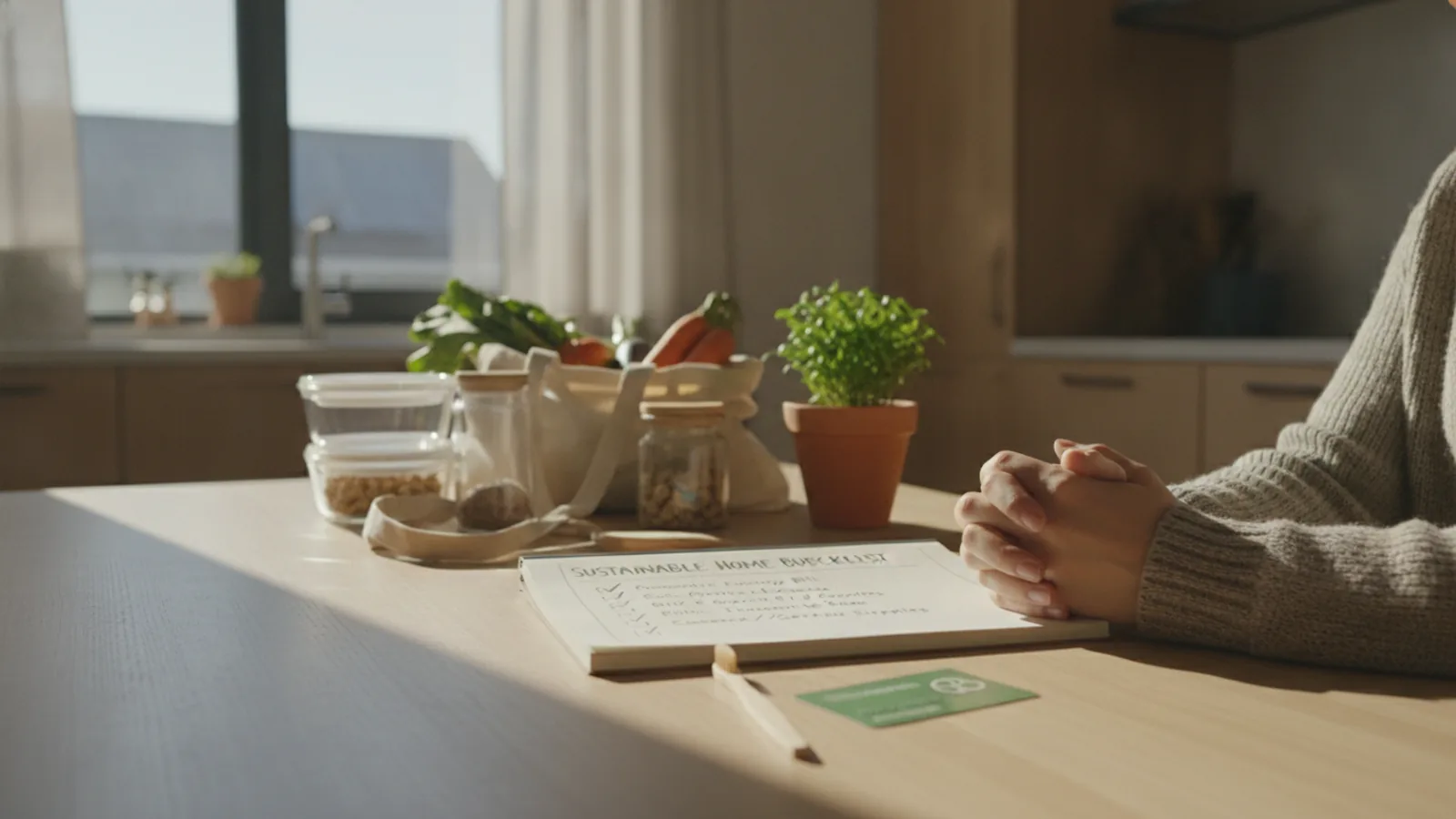
Final Checklist for Sustainable Home Design Questions
Use this checklist to ensure you've covered all the essential questions for your sustainable home design project.
By thoroughly addressing these questions, you'll be well on your way to designing a home that is not only beautiful and comfortable but also environmentally responsible and cost-effective for years to come.