Engineered Wood vs Solid Wood Flooring: Which Should You Choose?
A practical head-to-head comparison of Engineered Wood and Solid Wood Flooring, covering quick verdict, key differences, category winners, buyer fit, and FAQ.
Engineered Wood vs Solid Wood Flooring: Which Should You Choose?
Head-to-head comparison
Overall winner: Engineered Wood Flooring for its exceptional versatility and modern suitability across a wider range of home environments.
Engineered wood flooring offers superior stability in fluctuating humidity, easier installation, and a more accessible price point, making it ideal for most contemporary homeowners. Solid wood flooring, while unmatched in its potential for lifelong refinishing and classic appeal, demands more specific environmental conditions and a higher upfront investment.
Head-to-Head Scorecard
Measurement
Key Differences: Construction and Composition
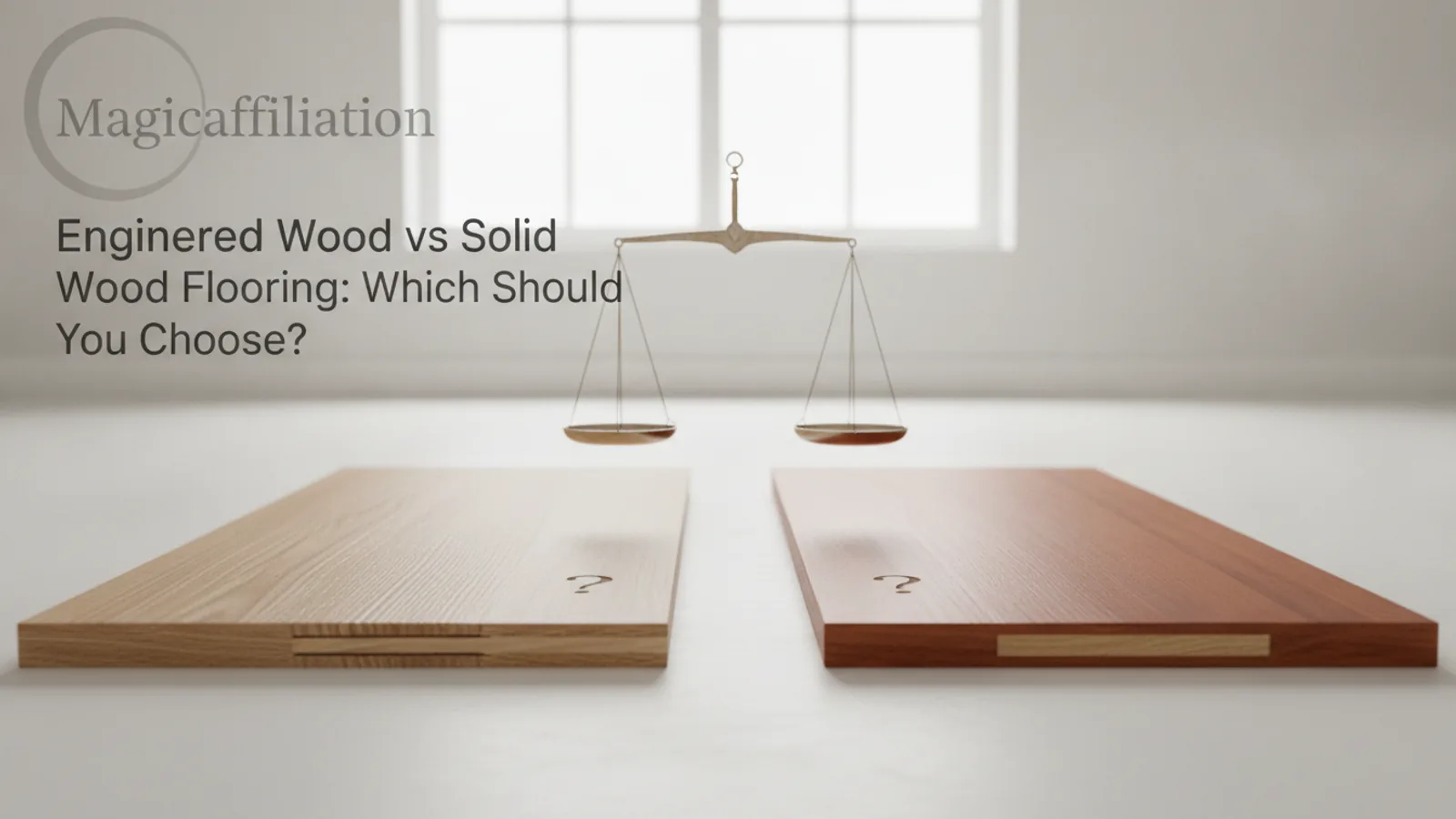
The fundamental distinction between engineered wood and solid wood flooring lies in their construction. Solid wood flooring is precisely what its name implies: a single piece of hardwood, milled from a timber log, typically 3/4 inch thick. This uniform composition means the entire plank is usable wood from top to bottom.
Engineered wood, on the other hand, is a composite product. It consists of multiple layers bonded together. The top layer, known as the veneer or wear layer, is a thin slice of real hardwood (the same species as solid wood). Beneath this aesthetic layer are several cross-ply layers of high-density fiberboard (HDF) or plywood. This multi-ply core is engineered to enhance stability and resistance to moisture, preventing the natural expansion and contraction common in solid wood.
Measurement
Routine Fit: Versatility and Installation Locations
The construction differences directly impact where each type of flooring can be routinely installed. Solid wood is very sensitive to moisture and humidity fluctuations. When exposed to changes in environmental moisture, solid wood planks can expand, contract, cup, or gap. For this reason, solid wood is generally recommended only for on-grade or above-grade installations (ground level or higher) and not in basements or bathrooms, where moisture levels tend to be higher. It also requires careful acclimation to the home's environment before installation.
Engineered wood's cross-ply construction significantly improves its dimensional stability. The alternating grain patterns of the core layers counteract the natural tendency of wood to move with humidity changes. This makes engineered wood suitable for a much wider range of environments, including basements (below-grade), over concrete slabs, and even in areas with moderate humidity such as powder rooms (though still not ideal for full bathrooms with showers). Its stability also makes it compatible with radiant heating systems, which can be problematic for solid wood.
Measurement
Formula or Feature Winner: Durability and Refinishing Potential
When considering the lifespan and long-term appearance of your flooring, durability and the ability to refinish are crucial. Solid wood flooring, being a consistent material throughout its thickness, can be sanded and refinished many times over its lifespan. A standard 3/4-inch solid wood plank can typically endure 5-7 refinishes, with each sanding removing a small fraction of the wood. This capacity allows solid wood floors to last 75-100 years or even longer, appearing new with each restoration.
Engineered wood's durability in terms of surface wear is comparable to solid wood, as the top veneer is real hardwood. However, its refinishing potential is limited by the thickness of this veneer. Thin veneers (1-2mm) might not withstand any sanding, while thicker veneers (3-6mm) can typically be refinished once or twice. Once the veneer is sanded through, the flooring needs to be replaced. While the core layers are durable, they aren't meant to be exposed as the wear surface.
Measurement
Ease of Use: Installation Complexity and DIY Potential
Installation methods vary significantly between the two, impacting ease of use for both professionals and DIY enthusiasts. Solid wood flooring is almost exclusively installed using a nail-down or staple-down method, where planks are securely fastened to a wooden subfloor. This requires specialized tools (e.g., floor nailers) and a higher degree of skill to achieve a professional, stable result. It's a precise and labor-intensive process, making it less suitable for most DIYers.
Engineered wood offers much more flexibility in installation. It can be nailed or stapled like solid wood, but it also commonly features click-lock (floating) or glue-down options. Click-lock systems are particularly DIY-friendly, as planks simply snap together without the need for adhesives or fasteners, making installation quicker and less complex. Glue-down installations are also common, especially over concrete, and are generally easier than nail-downs for those with some experience. This broader range of installation methods significantly lowers the barrier to entry for homeowners looking to install their own flooring.
Measurement
Value Winner: Upfront Cost vs. Long-Term Investment
When evaluating cost, it's important to consider both the initial material price and the installation labor. Generally, engineered wood flooring tends to have a lower per-square-foot material cost than solid wood, especially for comparable wood species and grades. This is because it uses less of the expensive top-tier hardwood veneer per plank, relying on more common wood composites for its core.
Installation costs also typically favor engineered wood. Because engineered wood can often be floated or glued down, the labor required is usually less intensive and therefore less expensive than the specialized nail-down installation of solid wood. For solid wood, not only is the material often pricier, but the skilled labor required for proper installation, sanding, and finishing can significantly add to the overall project cost. However, the long-term value perspective shifts this balance somewhat. While solid wood has a higher upfront cost, its ability to be refinished multiple times means it can last for many decades, potentially reducing the need for full replacement over a long period. Engineered wood, with fewer refinishing cycles, may need replacement sooner, offsetting some of its initial cost savings.
Measurement
Buyer Confidence Winner: Aesthetics and Resale Value
From an aesthetic standpoint, both engineered wood and solid wood offer the beauty of real wood. Since engineered wood uses a genuine hardwood veneer, it provides the same authentic look, texture, and natural variations as solid wood. Both types are available in a vast array of species (oak, maple, hickory, walnut, etc.), finishes, plank widths, and colors. Often, it's difficult to distinguish between high-quality engineered wood and solid wood once installed, especially in terms of visual appeal. However, the thicker nature of solid wood can sometimes allow for deeper bevels or more traditional milling patterns that are less common in engineered alternatives.
Regarding resale value, solid hardwood floors have traditionally been seen as a significant asset, enhancing a home's value and appeal to buyers. Their longevity and classic status contribute to this perception. While engineered wood also adds value compared to other flooring types like laminate or carpet, it might not always carry the same perceived premium as solid hardwood, particularly for very high-end homes or historic properties. However, a well-maintained, high-quality engineered wood floor is still a strong selling point for many buyers, especially given its practical advantages.
Choose Engineered Wood If
- You live in a region with fluctuating humidity: Its stable construction is less prone to warping or gapping.
- You need to install flooring in a basement or over concrete: Engineered wood is suitable for below-grade installations where solid wood is not recommended.
- You have radiant heating systems: Its stability makes it a safe choice over underfloor heating.
- You prefer an easier or DIY-friendly installation: Click-lock or glue-down options are often simpler and faster.
- You are working with a more constrained budget: Generally, engineered wood has lower material and installation costs.
- You want a wide variety of wood species and finishes: Engineered wood often offers an extensive selection due to its veneer design.
Choose Solid Wood Flooring If
- You prioritize maximum longevity and refinishing potential: Solid wood can be sanded and refinished multiple times over many decades.
- You desire a truly traditional or historic aesthetic: The timeless appeal and depth of solid wood are unmatched for classic homes.
- You are installing in on-grade or above-grade rooms with stable humidity: Where moisture is well-controlled, solid wood thrives.
- You value the highest possible increase in home resale value: Solid hardwood floors are often considered a premium feature.
- You are prepared for a more involved installation process: Professional nail-down installation is required, often with longer acclimation periods.
- You seek a floor that truly lasts a lifetime, becoming part of the home's history.
Final Verdict: Engineered Wood vs Solid Wood Flooring
In the head-to-head comparison of engineered wood vs solid wood flooring for 2026, engineered wood emerges as the overall winner for most modern homeowners due to its enhanced versatility, stability in varying climates, and more accessible installation and cost. It provides the authentic look and feel of real wood without many of the environmental limitations of its solid counterpart.
However, the verdict is nuanced. Solid wood flooring remains the undisputed champion for those who prioritize generations of durability and the ability to endlessly refinish, restoring its beauty over a century or more. Its classic appeal and significant contribution to property value are undeniable for specific projects and traditional aesthetics.
Our recommendation is to carefully consider your home's specific conditions, your budget, and your long-term goals. If you need a practical, stable, and beautiful wood floor that can go almost anywhere, engineered wood is likely your best choice. If a timeless, refinishable, heirloom-quality floor is your ultimate aim, and your environment is suitable, solid wood is the superior investment.
Engineered Wood vs Solid Wood Flooring: Which Should You Choose? FAQ
What is the main difference between engineered wood and solid wood flooring?
The main difference lies in construction: Solid wood is a single, uniform piece of hardwood, while engineered wood has a real hardwood veneer on top of multiple layers of plywood or HDF, giving it superior stability against moisture.
Can engineered wood be refinished like solid wood?
It depends on the thickness of the hardwood veneer. Thinner veneers (1-2mm) may not be refinishable, while thicker veneers (3-6mm) can typically be sanded and refinished once or twice. Solid wood, with its full thickness, can be refinished many more times.
Which type of flooring is better for basements or areas with high humidity?
Engineered wood flooring is significantly better for basements or areas with fluctuating humidity. Its cross-ply construction makes it more dimensionally stable and less prone to warping or gapping than solid wood.
Is engineered wood cheaper than solid wood?
Generally, engineered wood tends to have a lower upfront material cost and often lower installation costs due to simpler installation methods (like floating). However, solid wood offers greater long-term value through its extensive refinishing potential.
Which type of flooring adds more value to a home?
Both engineered and solid wood flooring add significant value to a home compared to other flooring types. However, solid hardwood floors are traditionally perceived to add a slightly higher premium, especially in higher-end or historic properties, due to their classic appeal and extreme longevity.