How To Choose Window Treatments
A practical step-by-step guide to how to choose window treatments, including preparation, instructions, common issues, tips, and next steps.
How To Choose Window Treatments
This guide explains how to approach how to choose window treatments, including the preparation, practical steps, common mistakes, and final checks that help you finish with confidence.
Before You Start
Step-by-Step Instructions
Quick Reference
Common Problems When You Choose Window Treatments
Even with careful planning, sometimes issues arise when selecting or installing window treatments. Knowing these common problems can help you avoid them.
Incorrect Measurements
This is the most frequent and frustrating problem. Treatments that are too wide or too narrow, or too long or too short, will look unprofessional and may not function correctly. For inside mounts, if the treatment is too wide, it won't fit. If too narrow, there will be gaps. For outside mounts, if too short or narrow, it won't properly cover the window opening. Always measure at least twice and confirm with a third check.
Ignoring Functional Needs
Focusing only on aesthetics without considering privacy, light control, or insulation can lead to disappointment. Forgetting to prioritize blackout in a bedroom or moisture resistance in a bathroom often means needing to replace treatments sooner than expected. Ensure your initial needs assessment is thorough and revisited before buying.
Underestimating Installation Difficulty
Some window treatments, especially large drapes or custom shutters, can be heavy and complex to install. Improper installation can lead to treatments falling, damaging your walls, or simply looking uneven. If you're not comfortable with drilling into walls or working with specific hardware, budgeting for professional installation is a wise investment.
Mismatching Style with Room Decor
Choosing a treatment that clashes with your existing decor can make the room feel disjointed. A rustic wooden blind might look out of place in a modern minimalist space, just as sleek metal blinds might feel cold in a cozy, traditional room. Always consider the overall style and color palette of your room before finalizing your choice. Bring samples home to see them in your actual space.
Forgetting Child and Pet Safety
Traditional corded window treatments pose a strangulation hazard to young children and pets. This is a critical safety oversight. Always opt for cordless or motorized options in homes with kids and animals. Many regions have strict safety standards for window coverings, so be sure to check local guidelines.
Advanced Tips for How To Choose Window Treatments
Once you've mastered the basics, consider these advanced strategies to enhance your window treatments and overall home aesthetic.
Layering Window Treatments
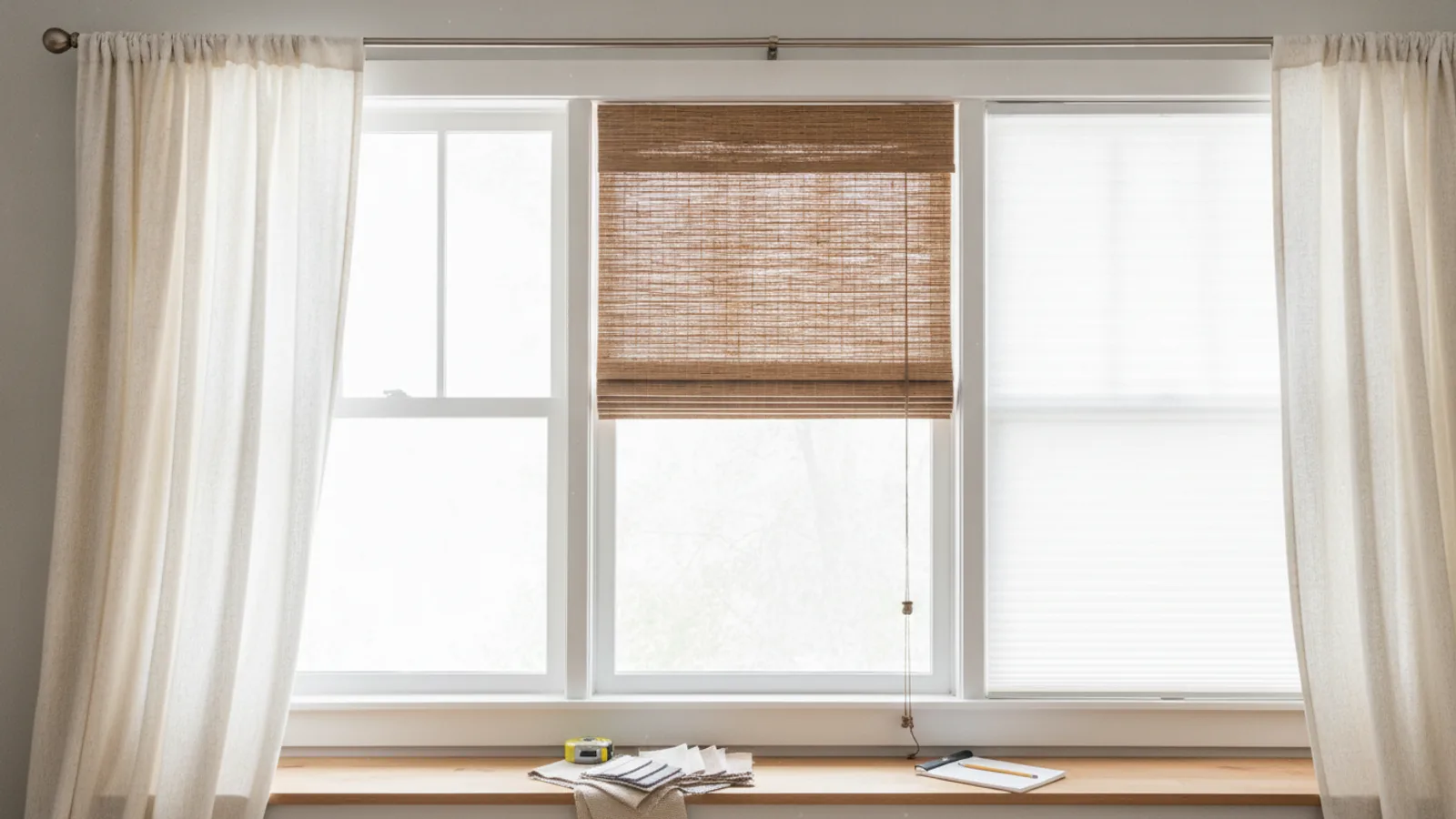
Layering allows you to combine different treatments for enhanced functionality and style. For example, you can pair sheer shades or blinds (for daytime light and some privacy) with decorative drapes (for full privacy, blackout at night, and added aesthetic appeal). This provides maximum flexibility for light control, insulation, and creates a rich, designer look.
Integrating Smart Home Technology
For ultimate convenience, consider motorized window treatments that integrate with your smart home system. You can schedule them to open and close at specific times, control them remotely via an app, or link them to voice assistants. This is especially useful for hard-to-reach windows or for creating an impression of occupancy when you're away.
Considering Outside-the-Box Options
Don't limit yourself to common solutions. Explore options like window film for UV protection or privacy without blocking light, or even stained glass inserts for unique decorative touches. For very wide windows or sliding glass doors, vertical blinds, panel track blinds, or custom drapes designed for large spans can be effective.
Customizing for Unique Windows
If you have uniquely shaped windows (arched, angled, skylights), you'll likely need custom-made treatments. While more expensive, these ensure a perfect fit and maintain the architectural integrity of your home. Many manufacturers offer specialized solutions for these challenging windows, from custom-cut shades to movable louvers for arches.
Prioritizing Durability and Longevity
While budget is important, sometimes investing in higher-quality materials and construction can save money in the long run. Durable materials like real wood, high-quality fabrics, and robust operating mechanisms will last longer, reducing the need for frequent replacements. Consider UV-resistant materials for windows that receive direct, intense sunlight to prevent fading and deterioration.
How To Choose Window Treatments FAQ
What's the best way to choose window treatments for a small room?
For small rooms, focus on treatments that don't take up much visual space. Thin roller shades, Roman shades mounted inside the frame, or light-colored, unlined curtains that stack neatly to the sides are good choices. Avoid heavy, bulky drapes or shutters that can make the room feel even smaller.
Should all window treatments in a house match?
Not necessarily. While a cohesive look is good, treatments don't need to be identical throughout the house. It's often better to match the treatment to the specific needs and style of each room. You can create continuity by using similar colors, textures, or materials across different rooms, even if the treatment type varies.
How do I choose window treatments for oddly shaped windows?
Oddly shaped windows (arches, circles, triangles) often require custom solutions. Manufacturers offer specialized blinds, shades, or shutters designed to fit these unique forms. Sometimes, simple decorative treatments like window film or custom-cut fabric inserts are also effective, allowing the window's shape to remain a feature.
What's the difference between blinds and shades?
Blinds are made of hard materials (wood, faux wood, metal, vinyl) with slats that can be tilted open or closed to adjust light and privacy. Shades are made of soft fabrics or woven materials that lift and lower as a solid piece, offering light filtering or blocking but usually less flexible light adjustment than blinds.
How do I make sure my window treatments are child-safe?
Always opt for cordless or motorized window treatments in homes with young children and pets. If you must use corded options, ensure all cords are kept short and secured with tension devices or cleats high up and out of reach. Never place cribs or furniture near windows with accessible cords.